
If you’ve never witnessed two West Africans argue about jollof rice, you’re missing out on one of the most entertaining debates in culinary history. I’m talking about the kind of passionate arguments that make political debates look tame. But while everyone’s busy fighting about whose jollof is better, hardly anyone asks the real question: where did this dish even come from? Buckle up, because the history of jollof rice is way more interesting than you’d think.
The Real Origin Story: The Wolof Empire
Let’s set the record straight. The history of jollof rice begins in the 14th to 16th century with the Wolof Empire, which stretched across what we now call Senegal, The Gambia, and Mauritania. The Wolof people were the original culinary geniuses behind this dish, and honestly, Senegal’s been sitting back watching Nigeria and Ghana fight like “…we literally started this whole thing, but go off.”
During this period, rice farming exploded across the region. The area became so known for growing rice that it earned the nickname “the Grain Coast of West Africa.” The Wolof people were cooking up something special, combining their locally grown rice with whatever ingredients they had on hand in one pot. Simple, efficient, delicious.
The original dish was called “thieboudienne” (pronounced cheb-oo-jen, and no, I still can’t say it perfectly either). It was rice cooked with fish, vegetables, and local spices. This wasn’t just food, it was the foundation of what would become West Africa’s most beloved and most controversial dish.
The Portuguese Changed Everything
Here’s where the history of jollof rice gets a major plot twist. In 1448, Portuguese traders set up shop along the Senegal River and brought ingredients from the New World and Asia. We’re talking plantains, bananas, groundnuts, and wait for it tomatoes.
Yeah, tomatoes aren’t even African. Mind. Blown.
Those tomatoes from South and Central America completely revolutionized jollof rice. Before tomatoes showed up, the Wolof people were probably using palm oil and local vegetables to get that reddish color. But once tomatoes entered the picture? Game over. That tangy, sweet tomato base we all associate with jollof rice today, all thanks to Portuguese trade routes accidentally creating the best fusion food in history.
Think about it: rice from either the Far East or Africa, tomatoes from the Americas, and West African cooking techniques all coming together. Jollof rice is literally the original globalization success story.
How Jollof Rice Conquered West Africa
As the Wolof people traded and migrated across West Africa, they brought their rice game with them. And here’s where the history of jollof rice gets really interesting, every single country put their own spin on it.
The dish spread from Senegal to Gambia, then to Nigeria, Ghana, Sierra Leone, and Liberia. Each place adapted the recipe based on what ingredients they had available and what their taste buds preferred. It’s like that game of telephone, except instead of the message getting messed up, you end up with twenty versions of the same dish and everyone’s grandma swearing hers is the only authentic one.
Some countries started using different proteins such as chicken, goat meat, fish, beef, lamb. The spices changed. The cooking methods evolved. But at its core, jollof rice remained the same: rice cooked in a flavorful tomato sauce with aromatic spices until it turns that gorgeous orange-red color.
What Actually Goes Into Jollof Rice?
Throughout the history of jollof rice, certain ingredients have stayed pretty consistent. You need:
The basics: Long-grain rice (usually parboiled), tomatoes, oil, onions, and aromatic spices. The rice gets cooked in the tomato sauce until it absorbs all that flavorful liquid and turns that signature orange-red color that makes your mouth water just looking at it.
The heat: Most recipes use scotch bonnet peppers. These aren’t your regular peppers, they’ll have your mouth burning and your nose running after one bite. Most West Africans grew up eating spicy food from birth, so we’re kind of immune to the heat. The hotter, the better.
The protein situation: This is where people get creative. You can serve jollof with chicken, goat meat, fish, beef, lamb, or even boiled eggs. The meat gets well-spiced and fried separately, then either mixed in or served on the side. Some people cook the rice together with the fried meat so it absorbs even more flavor.
The extras: Depending on where you are, jollof might be garnished with corn, carrots, green beans, onions, and tomatoes. In Nigeria, people love eating it with “moi moi”, a savory bean pudding that’s absolutely delicious. Others serve it with coleslaw (or as Nigerians call it, “salad”) to balance out the spice with some sweetness.
Every country, every region, every household has their own twist. Ask ten different cooks how to make “authentic” jollof rice and you’ll get ten completely different recipes. And somehow, they’re all right. And also all wrong. It’s the beautiful chaos of jollof rice.
Enter Kadoa: The Rain Woman Who Changed Everything
One name that deserves recognition in the history of jollof rice is Kadoa, known as the Rain Woman. She revolutionized the dish by introducing a signature recipe that included dawadawa (fermented locust beans), shea butter, and shrimp.
This wasn’t just a variation, it was a whole new level. Kadoa’s innovation shows how jollof rice has always been evolving, from a simple meal to a culinary masterpiece. Her version created such a distinct and unforgettable flavor that it highlights what makes jollof rice special: it’s never been static. It’s always adapting, always improving, always being reimagined by creative cooks who put their own stamp on it.
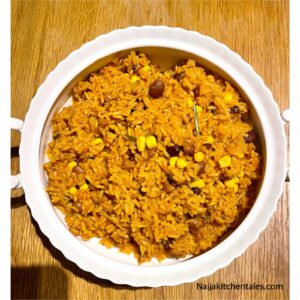
Want to try making your own jollof rice at home? One of my favorite variations is smokey jollof rice with beans and sweet corn. it adds extra texture and flavor while keeping that authentic smokey taste everyone loves. If you’re ready to get cooking, check out my detailed recipe for smokey jollof rice with beans and sweet corn where I break down every step to help you nail that perfect smokey flavor and fluffy rice texture.
The Modern Jollof Wars: When Social Media Got Involved
The history of jollof rice took a wild turn in the mid-2000s when social media showed up. Suddenly, the friendly competition between countries became a full-blown internet phenomenon. The jollof wars intensified in the mid-2010s, and honestly, it’s been entertainment ever since.
Nigeria vs. Ghana became the main rivalry, though other countries occasionally jump in to remind everyone they exist. Nigerian jollof is known for its bold spiciness and that smoky flavor from the “bottom pot”, the slightly burned rice that sticks to the bottom that Nigerians will literally fight over. Ghanaian jollof tends to be more aromatic, with extra spices and sometimes more oil. Ghanaians will tell you their version is more refined and flavorful.
The rivalry got so intense that the 2022 World Cup playoff match between Ghana and Nigeria was dubbed the “jollof rice derby” by local and international media. When Nigeria lost, their fans’ chaotic reaction confirmed just how seriously these competitions are taken.
Celebrity Jollof Incidents We Can’t Forget
In December 2019, American rapper Cardi B visited both Nigeria and Ghana and was served jollof in both countries. Social media absolutely exploded. Everyone wanted to know which version she liked better. The woman just wanted to eat some rice, and she accidentally walked into a geopolitical situation.
And we absolutely cannot forget when Jamie Oliver tried to make jollof rice in 2014. The man put lemon in it. LEMON. West Africans collectively lost their minds. We still don’t talk about it.
Jollof Rice Goes Global: Festivals, Competitions, and World Domination
The history of jollof rice entered a new chapter when it went international. In July 2017, the first annual Jollof Rice Festival was held in Washington DC and London. Chefs from different West African countries competed in cooking competitions, and at the end, Nigerian chef Atinuke Ogunsalu was crowned the winner.
The 2018 edition in Washington DC brought citizens from different West African countries together to share business ideas about West African gastronomy. This time? Liberia took home the crown, proving that the jollof wars aren’t just a two-country show.
Then in 2015, someone decided August 22nd should be World Jollof Rice Day. Since then, it’s become an annual event that never passes without the usual social media debates and drama. People post their jollof, argue about recipes, and celebrate this dish that’s become so much more than food.
Why Jollof Rice Matters
Understanding the history of jollof rice means recognizing it’s not just about food but about identity, culture, and community. This dish is to West Africa what pizza is to Italy, biryani is to India, or fried rice is to China. It’s comfort, it’s home, it’s pride all served on one plate.
No West African celebration is complete without jollof rice. Weddings? Jollof. Birthdays? Jollof. State banquets? Jollof. Funerals? Yes, even funerals because even sad occasions need good food. If you show up to an event and there’s no jollof rice, people start asking serious questions about the host.
The dish brings communities together. You’ll see cousins you haven’t talked to in years, reconnect with old friends, and meet new people, all because everyone showed up for the jollof. People will attend events for someone they don’t even know, just because they heard there’s going to be good jollof rice.
Jollof as Soft Power and Gastro-Tourism
The jollof wars aren’t just entertainment, they’re actually promoting West African culture on a global scale. High-ranking officials, diplomats, and foreign visitors to the region are often eager to taste this much-talked-about cuisine. Social media debates and celebrity endorsements serve as soft power instruments, attracting people to explore West African gastronomic culture.
The periodic online debates, the festivals, the competitions, they’re all making people outside Africa curious about West African food. And once they try jollof rice, they usually want to try everything else we’ve got. It’s basically free marketing for an entire region’s cuisine.
The Diaspora Experience
For West Africans living abroad, finding good jollof rice is a real struggle. American restaurants either don’t make it authentically or charge ridiculous prices because they know people will pay just to get a taste of home.
But here’s the real secret that’s hard to replicate outside of West Africa: firewood. Back home, jollof rice cooked over firewood brings a very distinctive smoky flavor to the pot that you just can’t get from a regular stove. This is why “party jollof” hits different, it’s usually cooked in massive pots over open flames, and that smoky, slightly charred flavor is what makes people lose their minds.
That’s the flavor everyone’s chasing when they talk about authentic jollof rice. You can follow the same recipe, use the same ingredients, but if you’re cooking on an electric or gas stove, it’s just not going to taste the same as jollof cooked over firewood at a Nigerian wedding or Ghanaian birthday party.
When you’re homesick and someone manages to recreate that firewood-cooked jollof taste, you might actually cry a little. It’s that serious. This dish represents home, no matter where in the world you are.
The Bottom Line
The history of jollof rice is the story of how one simple dish from the Wolof Empire became the centre of West African identity, pride, and some truly spectacular internet arguments. From the 14th century to your Twitter timeline, from the Senegal River to festivals in Washington DC and London, jollof rice has survived centuries and only gotten more popular.
Whether you’re team Nigeria, team Ghana, respect Senegal’s original recipe, or just appreciate good food without picking sides; you’re part of this tradition now. Every plate of jollof rice carries centuries of history, cultural exchange, innovation, and love.
Me? I think all jollof rice is good jollof rice. Some versions are just better than others. But I’m not telling you which one because I value my life and my social media mentions.
Now if you’ll excuse me, all this talk about jollof has made me incredibly hungry.