
Have you ever asked the question: where did pepper soup come from? If so, you are not alone. The history of pepper soup is not recorded in written archives but preserved through oral tradition. Also, the history of pepper soup in Nigeria is one of the most fascinating food origin stories in West Africa. It is a dish that is centuries old, deeply medicinal, and built entirely on indigenous forest spices. Moreover, entire ethnic communities now claim it as their own creation.
Picture this. A steaming bowl of deep, spicy, amber-coloured broth lands in front of you. The aroma hits you first. It is warm, woodsy, and earthy, with a floral heat that opens your airways before you even take a sip. Pieces of tender goat meat or catfish sit in the broth like a quiet promise. You pick up your spoon, and the first taste takes you somewhere ancient.
That is Nigerian pepper soup. It has been carrying people to a place of warmth, comfort, and healing for centuries.
Why Pepper Soup Means More Than Food in Nigeria
Whether you grew up knowing it as the pot your mama stirred after a new baby arrived, the steaming bowl someone placed in front of you when harmattan brought a stubborn cold, or the dish that greeted guests at every naming ceremony and celebration, pepper soup remains woven into the fabric of Nigerian life. It is food, medicine, culture, and memory all at once.
In this post, we are going all the way back to the roots. We will look at where pepper soup came from, which communities first made it their own, what the spices really are and why they matter, the nutritional science behind its healing reputation, and how it became the celebrated national dish it is today. Furthermore, this article draws on academic research, including peer-reviewed papers from Delta State University (2025) and ScienceDirect (2024), as well as oral traditions and food history from Nigerian communities.
Grab a bowl. Let us begin.
What You Will Find in This Post
- What Is Nigerian Pepper Soup?
- Where Did Pepper Soup Come From? The Honest Answer
- The Real Spices: What Actually Goes Into Pepper Soup
- Modern Modifications: How the Recipe Has Evolved
- Which Ethnic Groups Make Pepper Soup? Regional Varieties
- Pepper Soup as Medicine: The Healing Tradition
- The Nutritional Science: Is Pepper Soup Good for You?
- Pepper Soup in Nigerian Ceremony and Social Life
- How Trade and Colonialism Shaped the Recipe
- Nigerian Pepper Soup in the UK, US, and the Diaspora
- How Many Types of Pepper Soup Are There in Nigeria?
- Why Pepper Soup Matters: Culture, Identity, and the Future
- Frequently Asked Questions
What Is Nigerian Pepper Soup?
Nigerian pepper soup is a light, broth-based soup. Various meats or fish, chilli peppers, and a signature blend of indigenous aromatic spices, gives pepper soup its distinctive flavour. Unlike egusi, banga, or okra soup, pepper soup is watery and clear. It relies entirely on its spice blend to deliver flavour rather than thickness.
Here is something worth knowing. Despite its name, pepper soup is not primarily about heat. Research published in the Journal of Ethnic Foods (ScienceDirect, 2024) confirms aromatic African spices rather than black pepper, primarily season the dish. The flavour profile is nutty, bitter, woodsy, earthy, and floral. The heat from chilli pepper is an addition. It is not the foundation.
Common proteins include goat meat, chicken, catfish, tilapia, cow leg, beef offal, and even snail or bush meat depending on the region. People enjoy it as an appetiser at parties,
a healing home remedy, and a social dish at informal restaurants known as pepper soup joints, which you can find in every Nigerian city.
Where Did Pepper Soup Come From? The Honest Answer
Most food blogs will not tell you this. There is no single written record, no documented date, and no named individual credited with inventing pepper soup. Like most ancient African dishes, people never wrote its origin down. Instead, communities passed it from hand to hand, pot to pot, and generation to generation. The true story of pepper soup lives in oral history, not in archives.
Nevertheless, the clues are there. They live in the geography, the ingredients, the oral traditions, and the academic research. All of them point in the same direction.
The Urhobo Claim: What the Academic Research Says
The most significant statement in the academic literature comes from peer-reviewed research published by scientists at Delta State University, Abraka (2025). After documenting the full history, ingredients, and medicinal properties of pepper soup, the paper closes with this important line:
“Among the Urhobo people, there is a strong cultural belief that pepper soup originated in Urhobo land.”
This is not a casual observation. When academic researchers
close a scientific paper with a statement about a community’s cultural belief, they are signalling that this oral tradition carries weight. Additionally, no other Nigerian ethnic group has made a comparable documented claim.
Why the Geography Points to the Niger Delta
Beyond the oral tradition, the geography tells its own story. The core spices of Nigerian pepper soup, namely uda, ehuru, uziza seeds, and ataiko, all grow naturally in the tropical rainforest belt of Southern Nigeria. This is the precise ecosystem that Niger Delta communities have called home for thousands of years. These same rainforest ingredients also appear in traditional dishes such as banga soup. Also, these ingredients did not come through import or trade routes; local communities sourced them directly from their environment. They were literally growing in the forests and along the riverbanks surrounding these communities.
Furthermore, researchers at Delta State University note that many of the spices used in traditional pepper soup are obtained from the wild. This means people foraged them long before they
became market commodities. As a result, historians believe the dish predates organised trade or agriculture, making it genuinely ancient.
What Tribe Makes Pepper Soup? The Evidence of Urhobo Varieties
One of the strongest indicators that a dish originated in a particular community is how many variations exist within that community. When a dish is relatively new, people usually prepare it in one or two ways. In contrast, when a dish has been part of a culture for centuries, it develops into many distinct forms.
The research documents that among the Urhobo people of Delta State alone, there are approximately seven different types of pepper soup. Moreover, the average Urhobo woman can prepare three or four varieties. These named varieties include irhibo-erhanre, igbagba, ovwovwo, irhibo-otor, a
nd ukodo. In ukodo, cooks prepare yam or plantain directly in the pepper soup broth. This extraordinary range of variation within a single ethnic community speaks to centuries of culinary evolution.
How Pepper Soup Spread Across Nigeria
The Niger Delta has historically been one of the most active trading regions in West Africa. Long before colonisation, the riverine communities of the Delta traded fish, palm oil, and agricultural produce with inland communities. Consequently, pepper soup and its spice ingredients almost certainly spread to the Igbo, Yoruba, Hausa-Fulani, and Efik communities through these networks.
In addition, in a tropical climate without refrigeration, the spices had a practical role beyond flavour. The antimicrobial compounds in uda, ehuru, and uziza helped preserve cooked food and delay spoilage. This was a critical function in the humid Niger Delta environment and likely made pepper soup
one of the most logical and necessary dishes to develop in that specific geography.
So, where did pepper soup originate? The most honest and evidence-supported answer is this: it was born in the rainforest communities of the Niger Delta, most likely among the Urhobo and their neighbouring peoples. Centuries of intimate knowledge of forest spices, riverine proteins, and the healing power of plants shaped it.
No single person invented it. No single date marks its beginning. It grew the way all great things grow: slowly, communally, and with love.
The Real Spices: What Actually Goes Into Nigerian Pepper Soup
Understanding the history of pepper soup requires looking closely at its spices, which carry its cultural identity. Ask any Nigerian what makes pepper soup taste the way it does, and the answer is always the same: the spices. These were not just cooking ingredients. They were cultural artefacts, passed from mother to daughter, foraged from the wild, traded across markets, and valued as much for healing as for flavour. Many of these ingredients also appear in essential Nigerian spice traditions that shape soups, stews, and ceremonial dishes across the country. According to research from Delta State University, Abraka (2025), the core spice ingredients of Nigerian pepper soup are the following.
Uda (Negro Pepper / Xylopia aethiopica)
Uda is the backbone of pepper soup. Different communities know it by different names: Uda in Igbo, Urierien or Urheri in Urhobo, and Eeru alamo in Yoruba. These dark, narrow dried pods produce that deep, smoky, musky warmth you smell the moment a pot starts to boil. That aroma you always recognise? That is mostly uda.
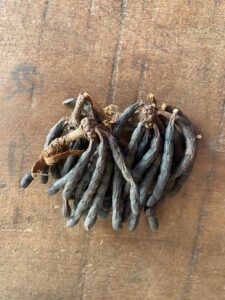
Across many Nigerian communities, people widely associate Uda with postpartum recovery. New mothers across every Nigerian ethnic group receive uda-rich pepper soup after childbirth. It promotes healing, stimulates appetite, relieves abdominal pain, and prevents haemorrhage. Research also documents its us
e in treating malaria, dysentery, stomach aches, and coughs.
Ehuru (African Nutmeg / Monodora myristica)
Ehuru is Erhe or Eghwore in Urhobo, Ehuru in Igbo, Ariwo in Yoruba, and Ebenoyoba in Benin. This spice gives pepper soup its nutty, aromatic depth. First, you roast it, and it crackles in the dry pan. Then, you peel away the woody shell before grinding the inner seed. The aroma that releases is rich, complex, and entirely unique.
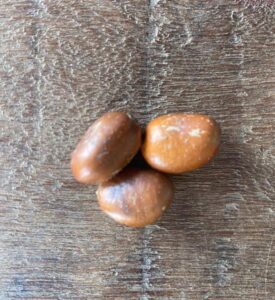
Laboratory research confirms that ehuru inhibits bacterial growth. Traditionally, people use it to treat scabies, malaria, and dysentery. It also supports respiratory health, which is why generations of Nigerian mothers insisted it belonged in every pot of pepper soup during harmattan or illness.
Uziza Seeds / Eshasha (Ashanti Pepper / Piper guineense)
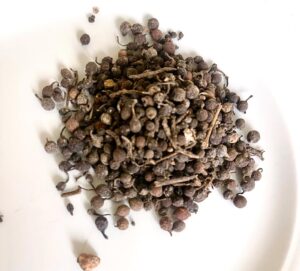
These small, dark seeds are Eshasha in Urhobo, Iyere in Yoruba, and Uziza in Igbo. They bring a bold, earthy pungency to the pot. People also call them Benin pepper or Guinea cubeb. Like uda and ehuru, cooks roast them before grinding to release their full aroma. In traditional Nigerian medicine, people use them to treat infertility and support reproductive health. They are also high in dietary fibre, which benefits digestive health.
Scotch Bonnet or Red Pepper (Capsicum frutescens)
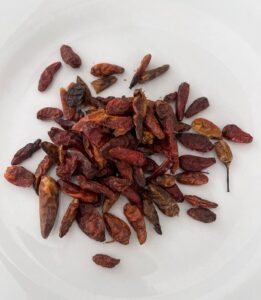
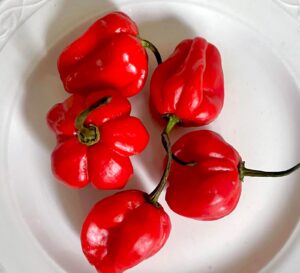
Red pepper is the heat element of pepper soup. Depending on taste, people use fresh scotch bonnet, habanero, or dried red pepper according to taste. The amount varies greatly depending on the type of pepper soup and personal preference. Importantly, academic research confirms a key point: pepper is not the main component of pepper soup. The dish does not need to be very spicy. Additionally, people in traditional medicine believe that Capsicum frutescens prevents intestinal worms and strengthen the body against fever and colds.
Crayfish: The Essential Addition
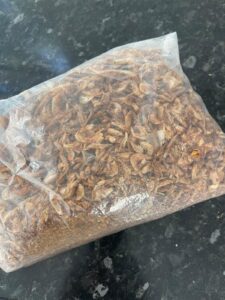
For the majority of Nigerians, pepper soup without crayfish is incomplete. The Delta State University research explicitly states this. Dried ground crayfish adds an unmistakable depth of savoury flavour to the broth. It is also an excellent source of protein, healthy fats, vitamins, and minerals, making it a genuine nutritional contributor rather than just a flavour enhancer.
Scent Leaves (Efirin / Ocimum basilicum or Ocimum gratissimum)
Fresh scent leaves are Efirin in Yoruba, Nchanwu in Igbo, and Obenetietien in Urhobo. People add them towards the end of cooking, giving the spice blend a fragrant, herbaceous freshness. Dry scent leaves can also be use. Research has also documented their use as a remedy against bacterial diarrhoea.
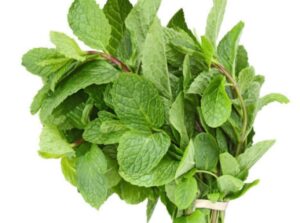
These are the ingredients every Nigerian recognises as the foundation of a proper pot of pepper soup. The names differ slightly across ethnic groups, but the spices are the same. This is what your mother used. What your grandmother used. What the woman at the roadside joint uses.
Modern Modifications: How the Pepper Soup Recipe Has Evolved
Nigerian cooks have never been afraid to adapt. As lifestyles changed, cities grew, and the diaspora spread across the world, the recipe evolved. Sometimes it changed out of necessity. Other times it changed out of creativity. And sometimes, a cook simply trusted their instincts and added what they had.
Today, many Nigerian home cooks, especially in urban areas and in the diaspora, routinely add fresh ginger, onions, and garlic to their pepper soup base. In addition, seasoning cubes such as Maggi and Knorr have become standard in most modern kitchens. Pre-packaged pepper soup spice blends are also now widely available in Nigerian markets, African stores abroad, and online. As a result, the dish has become far more accessible to younger and diaspora cooks who may not have grown up grinding spices from scratch.
The spice profile also shifts depending on the type of pepper soup being made. Fish pepper soup tends to be lighter, with more scent leaves and less uda. Goat meat and assorted meat versions carry a heavier and more robust spice blend. People often make chicken pepper soup for the sick or new mothers, and they prepare it more gently. In this version, ginger and onions take a more prominent role.
Through all the adaptations, the soul of the dish has not changed. Whether you grind your uda and ehuru yourself in a mortar or reach for the pre-packaged spice mix, the moment that pot starts to steam and that familiar aroma fills your kitchen, you know exactly what you are making.
Which Ethnic Groups Make Pepper Soup? Regional Varieties Explained
No single ethnic group can claim sole ownership of pepper soup. In various forms, it emerged across multiple Nigerian communities. Each group adapted it to their local environment, available ingredients, and cultural needs. Here is how the major groups made it their own.
The Urhobo and Niger Delta Peoples: The Oldest Tradition
The Urhobo, Ijaw, Ogoni, and Ikwerre peoples of the Niger Delta have the most deeply embedded pepper soup traditions. Fishing and riverine communities built their pepper soup around abundant fresh fish. Approximately seven distinct Urhobo varieties exist. Furthermore, the iconic fish pepper soup culture of “point and kill,” where a diner points to a live fish and watches it prepared fresh, originated here.
The Igbo Tradition
Among the Igbo of South-Eastern Nigeria, goat meat pepper soup became the pepper soup of choice. In particular, isi ewu, which is goat head pepper soup, is a near-mandatory dish at Igbo parties and ceremonies. People frequently serve it as a starter alongside cold drinks before the main buffet. For many Igbo people, goat meat pepper soup announces that a celebration has truly begun.
The Yoruba Tradition
The Yoruba of South-Western Nigeria prepare pepper soup, sometimes referred to as Ogunfe, with goat or ram meat. Their versions often have deeper and smokier flavour profiles. People prescribed the dish as a fever remedy and as the first food for new mothers. It also holds ceremonial dimensions in Yoruba cultural life.
The Efik and Cross River Tradition
The Efik people of Cross River State have a strong reputation across Nigeria as master cooks. Their version of pepper soup reflects their coastal heritage and features fresh seafood with a spice combination that strongly emphasises the uda and ehuru combination. The Efik, along with the Ibibio, spread Nigerian dishes including pepper soup through their historical trade networks.
The Hausa-Fulani Tradition
In Northern Nigeria, people make pepper soup with chicken or beef, and the spice profile often leans toward ginger and local Northern spices. The Northern version is especially popular during cold harmattan nights when its warming heat is most welcome.
Pepper Soup as Medicine: The Traditional Healing Tradition
Across every ethnic tradition, one thing remains consistent. People have always considered pepper soup both medicine and food. Traditionally, people use it for the following purposes:
Postpartum recovery: Across Nigeria, families have given new mothers uda-rich pepper soup for centuries to support postpartum recovery. It accelerates wound healing, stimulates digestion, restores strength, and prevents haemorrhage. This practice spans Igbo, Yoruba, Urhobo, Ijaw, and Hausa communities alike.
Colds, flu, and fever: The combination of hot broth, chilli, ehuru, and scent leaves makes pepper soup a powerful natural decongestant and fever-reducer. Many Nigerians still reach for a bowl of pepper soup at the first sign of a cold rather than over-the-counter medicine.
Digestive health: The spice blend stimulates digestive enzymes and helps the body break down proteins more effectively. Researchers have specifically documented uda’s ability to combat gastrointestinal infections.
Malaria and infections: Traditional healers in the Niger Delta documented the use of uda and ataiko in treating malaria and intestinal parasites over many generations.
Reproductive health: In Nigerian traditional medicine, people use uziza seeds to treat infertility and support reproductive health in both men and women.
Pepper soup occupies the same cultural space that chicken soup holds for Jewish and Western communities and that bone broth holds in East Asian food cultures. It is the soup you bring to a sick friend. The soup welcomes a new baby and quietly says, without words, that you are cared for.
The Nutritional Science: Is Pepper Soup Good for You?
The short answer is yes, genuinely. Nigerian grandmothers have always known that pepper soup heals. Now science is putting actual numbers to what those grandmothers understood by instinct. Scientists tested a typical bowl of Nigerian fish pepper soup in a laboratory (Tonukari et al., 2013) and found results that back up centuries of traditional knowledge.
High Protein, Low Fat, Low Sugar
Pepper soup is genuinely good for your body. Lab tests show that it contains high protein and is very low in fat and sugar. That means it fills you up and fuels your muscles without loading your body with the things that slow you down. Think of it as the Nigerian equivalent of a protein shake, except it tastes infinitely better and your grandmother made it.
Cholesterol: The Good News
You know how doctors talk about “good” and “bad” cholesterol? Good cholesterol, known as HDL, protects your heart. Bad cholesterol, known as LDL, clogs your arteries. Lab tests on pepper soup found healthy levels of good cholesterol and very low levels of bad cholesterol. In simple terms, pepper soup is heart-friendly food.
Antioxidant Power: What Does That Actually Mean?
You have probably heard the word antioxidant thrown around with blueberries, green tea, and spinach. Here is what it actually means. Your body constantly battles tiny harmful particles called free radicals. These particles damage your cells, speed up ageing, and increase your risk of disease. Antioxidants fight them off and protect your body.
Scientists tested pepper soup and found its antioxidant power to be exceptionally high. In fact, it is comparable to those celebrated superfoods you often see promoted on health blogs. The tests also found high levels of phenols and flavonoids, which are naturally occurring compounds that reduce inflammation, fight viruses, and support your immune system.
Those spices you have been grinding for years? They are quietly protecting your cells every single time you eat them.
Vitamins, Minerals, and Iron
The spices in pepper soup are also rich in micronutrients. They contain Vitamin C, flavonoids, tannins, phenols, and carotenoids. All of these help protect the body against cell damage. Notably, uda contains high levels of iron, which is critical for women. This is one of the key reasons families have given new mothers uda-rich pepper soup after childbirth for centuries.
The researchers who conducted this analysis reached a clear conclusion: pepper soup can be regarded as both a nutritious and health-promoting food. Science agrees with your grandmother.
Pepper Soup in Nigerian Ceremony and Social Life
Academic researcher Duttagupta (2013) categorised Nigerian pepper soup as an intangible cultural heritage of Nigeria. This means it is classified alongside music, oral literature, and traditional festivals as part of Nigeria’s cultural identity. Pepper soup appears at virtually every major life event in Nigerian communities. Alongside jollof rice, it remains one of the most recognisable foods served at Nigerian celebrations.
Naming ceremonies and omugwo: After a new baby is born, families prepare uda-rich pepper soup for the mother as part of omugwo, the postpartum care tradition. The maternal grandmother often takes charge, and people regard its preparation as a serious act of love and cultural duty..
Weddings and celebrations: Goat meat pepper soup is near-mandatory at Nigerian weddings and parties, especially in Igbo culture. People frequently serve it as a starter before the main buffet begins.
Funerals and mourning: Pepper soup is also present in moments of grief. It is one of the first meals provided to a bereaved family, offering warm and nourishing comfort during a difficult time.
Bars and pepper soup joints: This is a uniquely Nigerian institution. Pepper soup joints are informal restaurants where people serve hot pepper soup alongside chilled beer or soft drinks. Also, these nightlife spaces often serve suya alongside pepper soup. These spaces are deeply social and form part of Nigerian nightlife culture in every city across the country.
How Trade and Colonialism Shaped the Pepper Soup Recipe
European traders arrived in West Africa from the 15th century onwards. They brought new spices including black pepper, cinnamon, cloves, cumin, and fennel. Over time, some of these gradually appeared as optional additions in certain pepper soup recipes. However, they never replaced the indigenous spice core.
The colonial era also brought increased urbanisation across Nigeria. As a result, regional pepper soup recipes began to travel between communities. Igbo traders brought their goat meat version to Lagos. Hausa butchers in Southern markets introduced beef variations. Each community’s recipe began to cross-pollinate, creating the rich and diverse landscape of regional variations we see today.
In the 1990s, Nigeria’s Raw Materials Research and Development Council initiated programmes to support local spice processing. This boosted the production and market availability of pre-packaged pepper soup spice mixes. Consequently, the dish became more accessible and standardised for urban households and younger cooks growing up away from the grandmothers who knew the old recipes by feel.
Nigerian Pepper Soup in the UK, US, and the Diaspora
The late 20th century brought waves of Nigerian emigration to the United Kingdom, United States, Canada, and continental Europe. Nigerian communities planted their food culture wherever they settled. Pepper soup travelled well because it required only a compact spice blend and adapted easily to locally available proteins.
This global spread is an important chapter in the modern history of pepper soup. Today, Nigerian restaurants in London, Houston, Toronto, and Amsterdam serve pepper soup to diaspora communities hungry for home. They also serve it to curious non-Nigerians who are discovering West African cuisine for the first time. African food stores across these cities stock the full range of pepper soup spices imported directly from Nigeria.
Social media has accelerated this spread enormously. Nigerian food creators on YouTube, TikTok, and Instagram have introduced pepper soup to millions of viewers worldwide. The dish has appeared in international food publications and diaspora cookbooks. It continues to inspire fusion adaptations, though purists will tell you that nothing beats the original.
How Many Types of Nigerian Pepper Soup Are There?
One of the most remarkable things about pepper soup is its versatility. The same spice tradition underpins an enormous range of protein-based variations. Here are the major types you will encounter across Nigeria.
Goat Meat Pepper Soup (Isi Ewu):
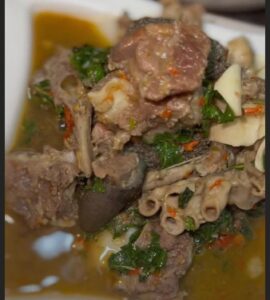
This is the party favourite. People simmer tender goat pieces or goat head in a sharp, aromatic broth. It is the most popular version at Igbo celebrations and the mainstay of pepper soup joints across the country.
Catfish Pepper Soup (Point and Kill):
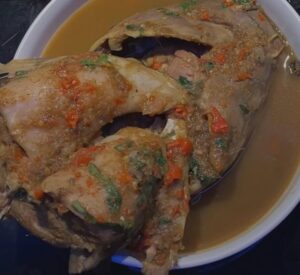
This is the iconic Niger Delta creation. People cook fresh catfish, with uda, ehuru, uziza, and scent leaves. They typically serve it with boiled yam, plantain or plain white rice.
Assorted Meat Pepper Soup (Orisirisi):
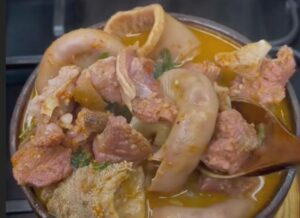
People prepare this version with a combination of offal, including tripe, kidney, liver, and cow leg. The variety of meat brings deep flavour to the broth, and it is a favourite in bars and restaurants across Nigeria.
Chicken Pepper Soup:
This is a lighter version that is popular in homes as a comfort food and cold remedy. It is often the pepper soup of choice for nursing mothers and those who are unwell.
Cow Leg Pepper Soup:
This version is popular across South-South Nigeria. People slow-cook cow foot until it becomes gelatinous, collagen-rich, and deeply flavourful.
Ukodo (Yam Pepper Soup Pottage):
In this Urhobo specialty, people cook unripe plantain or yam directly in the pepper soup broth. It turns the light soup into a heartier pottage and is a favourite at Urhobo festivals and celebrations.
Melon Pepper Soup:
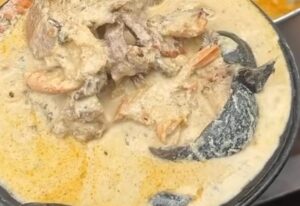
This version is for the Urhobo people. People also use melon, known as egusi, together with pepper soup spices and any protein of choice. Some people also refers to it as white soup.
Okra Pepper Soup:
In this version, you just add the okra to either the melon pepper soup type or the normal pepper soup.
Fish Pepper Soup (Tilapia, Croaker, Snapper):
This version is popular across the Niger Delta and among diaspora cooks. It is light, fragrant, and quick to prepare. It is often the first pepper soup that diaspora children learn to make at home.
More recently, plant-based and vegetarian versions have also emerged. These use mushrooms, unripe plantain, and tofu as protein alternatives. This contemporary adaptation demonstrates the dish’s remarkable staying power and flexibility.
Why Pepper Soup Matters: Culture, Identity, and the Future
Nigerian pepper soup holds a similar cultural significance to Nigerians as chicken soup does to Jewish communities or pho does to Vietnamese culture. It is more than a meal. It is a language through which Nigerians express care, celebrate life, mourn loss, and maintain connection to their roots across distances.
For the growing Nigerian and African diaspora in the UK and US, pepper soup is particularly powerful. A bowl of it in London or Houston can transport a person back to a grandmother’s kitchen in Warri, Enugu, or Calabar. The aroma of ehuru and uda carries memory in a way that is almost physical.
As Nigeria’s food culture gains international recognition through diaspora communities, food writers, travel shows, and African restaurants in global cities, pepper soup stands at the forefront of this renaissance. It is one of the most immediately compelling introductions to Nigerian cuisine. It is simple in appearance, extraordinarily complex in flavour, and carries within every spoonful a story that is centuries in the making.
The Last Spoonful
From the riverbanks of the Niger Delta to the kitchens of Igbo grandmothers, from ancient herbal healing traditions to diaspora restaurants in London and Houston, pepper soup has journeyed far without ever losing itself.
It remains, at its core, what it has always been: a bowl of warmth made from the land, shared between people who care for one another. Our ancestors still forage the same spices from the forest. The proteins change, the regions vary, and the restaurants dress it up. Yet the soul of pepper soup remains unchanged. The history of pepper soup is therefore a story of continuity, migration, and cultural memory.
Next time you sit before a steaming bowl, take a moment before that first sip. You are tasting centuries of Nigerian wisdom, culture, and love.
That bowl knows things.
Frequently Asked Questions About Nigerian Pepper Soup
Here are the questions people search most about pepper soup.
Q: Where did pepper soup originate?
A: Pepper soup most likely originated in the Niger Delta region of Nigeria, among riverine communities including the Urhobo, Ijaw, and Ikwerre peoples. Academic research from Delta State University (2025) notes a strong cultural belief among the Urhobo people that pepper soup originated in Urhobo land. Furthermore, all the core spices grow naturally in the rainforest belt of Southern Nigeria, which supports this conclusion.
Q: What tribe makes pepper soup in Nigeria?
A: While many Nigerian tribes have their own version of pepper soup, the Urhobo people of Delta State have the oldest and most documented tradition, with approximately seven named varieties. The Igbo, Yoruba, Efik, Ijaw, and Hausa-Fulani communities also have deeply rooted and distinct pepper soup traditions.
Q: What spices are used in Nigerian pepper soup?
A: The key spices include uda (also called negro pepper), ehuru (also called African nutmeg), uziza seeds (also called Ashanti pepper), ataiko, fresh scotch bonnet or red pepper, crayfish, and scent leaves. Ginger, onions, and garlic are also common modern additions, especially in diaspora kitchens.
Q: Why do Nigerians eat pepper soup after giving birth?
A: Uda, which is a key pepper soup spice, is rich in iron, anti-inflammatory compounds, and antimicrobial properties. Families across Nigeria have given it to new mothers for centuries to accelerate wound healing, prevent haemorrhage, stimulate appetite, and restore strength. Modern biochemical research validates this traditional practice.
Q: Is pepper soup good for you?
A: Yes. Laboratory analysis found Nigerian pepper soup to be high in protein, low in fat and sugar, and packed with antioxidants. It also contains high levels of phenols, flavonoids, Vitamin C, carotenoids, and iron. Researchers conclude that it is both a nutritious and health-promoting food.
Q: How many types of pepper soup are there in Nigeria?
A: Researchers have documented at least seven types among the Urhobo people alone. Nationally, the most popular varieties include goat meat pepper soup, catfish pepper soup, chicken pepper soup, assorted meat pepper soup, cow leg pepper soup, and ukodo, which is yam pepper soup pottage.
Sources and Academic References
- Tonukari, N.J. and Ezedom, T. (2025). Pepper Soup: A Review. African Research Reports, Delta State University, Abraka.
- Journal of Ethnic Foods / ScienceDirect (2024). Pepper Soup: A Cultural and Culinary Exploration of a Traditional Nigerian Dish, with a Focus on Health Benefits and Antimicrobial Activity.
- Tonukari et al. (2013). Nutritional and Antioxidant Properties of Nigerian Pepper Soup. African Research Reports.
- Ndukwu, B.C. and Ben-Nwadibia, N.B. (2005). Ethnomedicinal aspects of plants used as spices and condiments in the Niger Delta area of Nigeria.
- George et al. (2010). Studies on the Palatability, Flavour and Aroma Properties of Ataiko (Aframomum sceptrum).
- Keswet, L.A. and Abia, W.A. (2015, 2020). Studies on Nigerian pepper soup and its sensory, nutritional and medicinal properties.
- Duttagupta, S. (2013). Intangible Heritage and Tourism. Referenced in ScienceDirect (2024).
- Wikipedia (2026). Peppersoup. Available at: https://en.wikipedia.org/wiki/Peppersoup
- Kitchen Butterfly (2018). On Pepper Soup Spice and Finding Names. Available at: https://www.kitchenbutterfly.com